![[personal profile]](https://www.dreamwidth.org/img/silk/identity/user.png) rfmcdonald
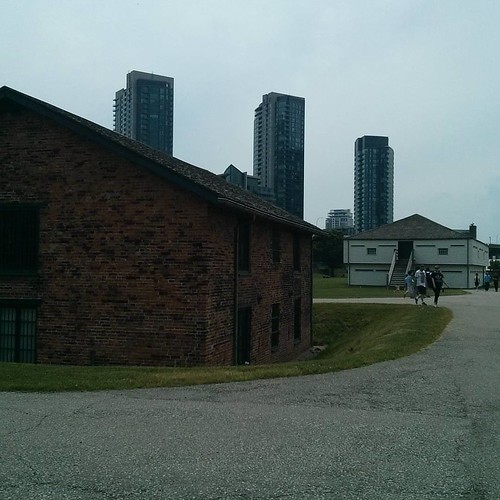
rfmcdonaldMy first stop at Doors Open was Fort York, a National Historic Site. The geography around Fort York has changed hugely: Once an outpost on the western fringes of Toronto, on the shore of Lake Ontario by the mouth of Garrison Creek, the fort is now at least two hundred metres inland. Even when I first moved to Toronto in 2004, it seemed as if all there was down here were vast fields of mud. Now, the old fort is surrounded by condo towers.
After taking the 63 Ossington southbound to Strachan Avenue, I ended up entering Fort York from that street, on its western edge. I spent the next few minutes walking through parkland, until I came to the Fort proper.

The stone-lined ramparts are inauthentic, product of the fort's reconstruction in the 1930s.

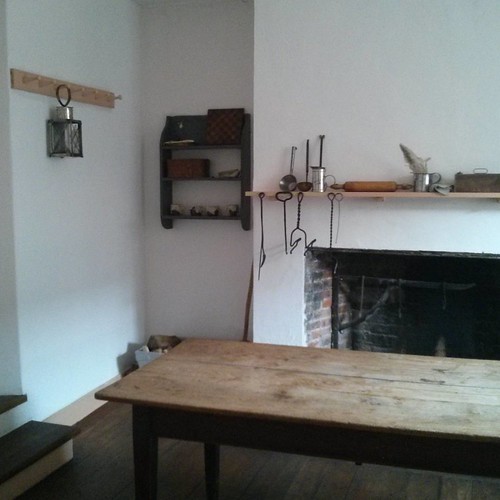
The officers' quarters, on the northwestern corner of the fort, spoke of the relative comfort and style enjoyed by the commanders at the base. (The common soldiers enjoyed rather less.)


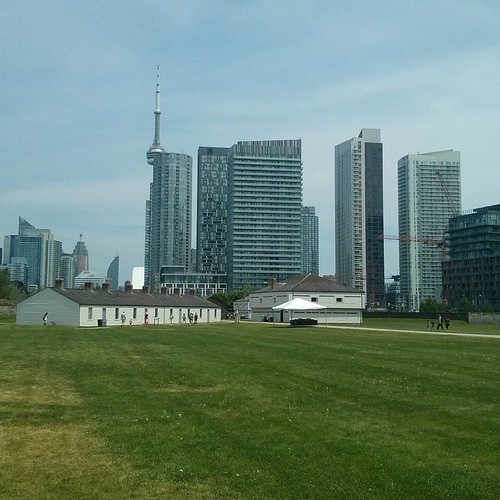
Looking east towards the other buildings on the fort, Toronto's skyline--specifically, the CN Tower and the condo towers of Harbourfront--stands out.
This cannon is facing what is now the rail line, perhaps defending against oncoming GO trains.

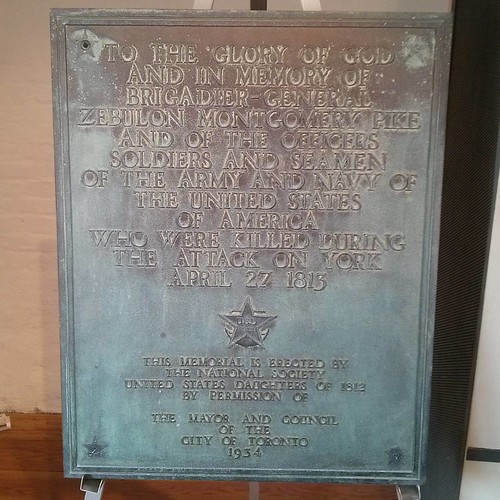
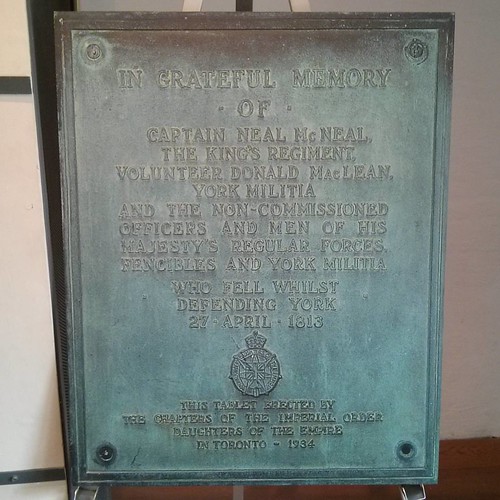
In 1934, American and Canadian/Commonwealth groups put up plaques in memory of the dead of the Battle of York, now on display to visitors inside.
The Brick Magazine lies at the far eastern end of the Fort complex.
Looking west from Bathurst Street, Fort York barely appears visible from behind the ramparts.

After taking the 63 Ossington southbound to Strachan Avenue, I ended up entering Fort York from that street, on its western edge. I spent the next few minutes walking through parkland, until I came to the Fort proper.
The stone-lined ramparts are inauthentic, product of the fort's reconstruction in the 1930s.
The officers' quarters, on the northwestern corner of the fort, spoke of the relative comfort and style enjoyed by the commanders at the base. (The common soldiers enjoyed rather less.)
Looking east towards the other buildings on the fort, Toronto's skyline--specifically, the CN Tower and the condo towers of Harbourfront--stands out.
This cannon is facing what is now the rail line, perhaps defending against oncoming GO trains.
In 1934, American and Canadian/Commonwealth groups put up plaques in memory of the dead of the Battle of York, now on display to visitors inside.
The Brick Magazine lies at the far eastern end of the Fort complex.
Looking west from Bathurst Street, Fort York barely appears visible from behind the ramparts.


