
Below the Prince Edward Battery lies a boardwalk that runs the length of Victoria Park's coastline. When you look up, you can just see the Canadian flag that flies above, and one of the wood-lined ports for the cannons.


An agreement to hire locally for constructing the Eglinton Crosstown was billed as a ground-breaking move that would leverage major transit projects to create jobs for disadvantaged communities. But more than a year after the consortium building the LRT agreed to put forward a plan, labour and community organizations say it has yet to deliver.
In 2014, the Toronto Community Benefits Network (TCBN) and Metrolinx, the provincial transit agency, signed a widely lauded framework outlining principles for “community benefit agreements” for Toronto’s light rail projects.
The agreement said companies selected to deliver the transit lines would be asked to commit to offering employment and apprenticeship opportunities to “historically disadvantaged” and “equity-seeking groups,” to ensure that some of the billions being invested in the projects would stay in local communities.
A construction consortium called Crosslinx won the bid for the second phase of the $5.3-billion Eglinton Crosstown in July 2015. But according to the TCBN, the company has yet to release any clear targets for so-called “diversity hires.”
Crosslinx declined to answer questions about its community benefit plan and instead referred the Star to Metrolinx, which is in charge of the light rail project. Agency spokesperson Anne Marie Aikins said Crosslinx has submitted community benefits and apprenticeship proposals, and Metrolinx and Infrastructure Ontario are in the “final stages” of reviewing them. She said the provincial agencies “expect to have an announcement very soon” and the agency is committed to the community benefits project.
The rise in Vancouver's average housing prices compared with the growth in average wages, rents and other economic factors make it the most likely to experience a sudden downward correction compared with 17 other large cities around the globe, according to the UBS Global Real Estate Bubble Index released this week.
The report also warned that investors are less likely to see growth in property value in high "bubble risk" cities.
Jon Woloshin, strategist at UBS Wealth Management Americas, said the report doesn't mean Vancouver is likely to experience a home price correction like the U.S. housing crisis that contributed to the 2008-09 recession. Rather, it's meant as a cautionary signal for potential real estate investors.
"Based on the different criteria that were factored into all these major markets, as we sit here today, Vancouver on a risk-reward basis scored the lowest, which is why it's at the top," he explained.</blockquote
Amazon says it will soon offer same-day delivery to its Prime customers in Toronto and Vancouver who order something online worth more than $25.
The service has been available in the U.S., but the online retailer is rolling it out in Canada for the first time ahead of the busy holiday shopping season.
"Prime was developed to make shopping on Amazon fast and convenient, and Prime members in Canada can now enjoy fast, unlimited, free Prime delivery seven days a week," spokesman Alexandre Gagnon said.
Any orders on eligible goods in those markets placed in the morning wil be delivered by 9 p.m. that day, the company says.
The province is considering more than 600 applications to remove land from the official Greenbelt, prompting worries from environmentalists that parts of the protected area might be opened for development.
A spokesperson for the Ministry of Municipal Affairs said in an emailed statement that any changes to the Greenbelt would be “minor.” The government has received these “site-specific requests” over the past 10 years, and is now assessing them as part of an ongoing review of the Greenbelt Plan, which was created in 2005.
Tim Gray, executive director of Environmental Defence, said he’s been told several times that the province has no intention of compromising the 1.8-million acre Greenbelt area, which was established to protect wild areas and farmland against the encroachment of suburban sprawl. Even so, he said, removing any land from the Greenbelt could legitimize calls for development in the protected corridor around the Greater Toronto and Hamilton Area.
“The whole point of creating the Greenbelt was not allowing incursions into it,” Gray said.
“Every inch you give, you then are asked to give a mile. That’s the risk.”
As the royal tour makes its way through Canada, one southwest Ontario mayor is calling on Canada to scrap its current multicultural policies and focus on ties to the monarchy.
[. . .]
Paterson stood by his Facebook comments Monday, telling CBC he welcomes new Canadians from around the world. But he expects them to conform to Canadian culture.
"If you're going to come to Canada and swear allegiance to Canada, which includes an allegiance to the monarchy, then be Canadian, that's all I'm saying," Paterson said. "Don't force us to change our ways. Come to Canada and be Canadian."
Paterson said he's not criticizing immigrants, but federal programs promoting multiculturalism. To Paterson, those come at the expense of traditions like the British monarchy.
The most recognizable feature of Toronto's skyline isn't a matter of debate. The CN Tower is both our most famous building and a navigational beacon that even longtime residents rely on to get their bearings on occasion. Take away this soaring landmark, and the city no longer looks like Toronto at all.
That's why it's so strange to look at images of certain Tehran's skyline. If you squint your eyes, it can seem startlingly like Toronto thanks to the cranes that seem to continually cover the sky and the presence of the Milad Tower, a slightly shorter communications beacon that shares a number of traits with our local version.
Kuala Lumpur also has a structure that resembles the CN Tower, but it shares the skyline with the brighter Petronas Twin Towers, which diminishes the centrality of the the KL Tower. Other major observation/communications towers in cities like Seattle don't really resemble the CN Tower in the first place.
Tehran's tower is just over 100 metres shorter than our central landmark, but the resemblance is heightened by the disc on its top section, which is located around the same area where the Skypod is on the CN Tower. As a distant silhouette, the two structures are eerily similar (even if that can't be said when they're examined up close).
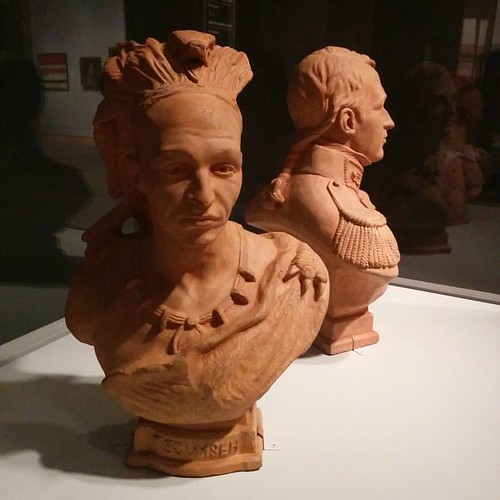
Within a week, Lord Castlereagh sent precise instructions which confirmed the worst fears of the Americans. The Indian boundary line was to follow the line of the Treaty of Greenville and beyond it neither nation was to acquire land. The United States was asked, in short, to set apart for the Indians in perpetuity an area which comprised the present States of Michigan, Wisconsin, and Illinois, four-fifths of Indiana, and a third of Ohio. But, remonstrated Gallatin, this area included States and Territories settled by more than a hundred thousand American citizens. What was to be done with them? 'They must look after themselves,' was the blunt answer.
In comparison with this astounding proposal, Lord Castlereagh's further suggestion of a 'rectification' of the frontier by the cession of Fort Niagara and Sackett's Harbor and by the exclusion of the Americans from the Lakes, seemed of little importance. The purpose of His Majesty's Government, the commissioners hastened to add, was not aggrandizement but the protection of the North American provinces. In view of the avowed aim of the United States to conquer Canada, the control of the Lakes must rest with Great Britain. Indeed, taking the weakness of Canada into account, His Majesty's Government might have reasonably demanded the cession of the lands adjacent to the Lakes; and should these moderate terms not be accepted, His Majesty's Government would feel itself at liberty to enlarge its demands, if the war continued to favor British arms. The American commissioners asked if these proposals relating to the control of the Lakes were also a sine qua non. 'We have given you one sine qua non already,' was the reply, 'and we should suppose one sine qua non at a time was enough.'

![[personal profile]](https://www.dreamwidth.org/img/silk/identity/user.png) branchandrootdancing_serpent
branchandrootdancing_serpent