rfmcdonald: (Default)

  • NOW Toronto looks at the Pickering nuclear plant and its role in providing fuel for space travel.

  • In some places like California, traffic is so bad that airlines actually play a role for high-end commuters. CBC reports.

  • Goldfish released into the wild are a major issue for the environment in Québec, too. CTV News reports.

  • China's investments in Jamaica have good sides and bad sides. CBC reports.

  • A potato museum in Peru might help solve world hunger. The Guardian reports.

  • Is the Alberta-Saskatchewan alliance going to be a lasting one? Maclean's considers.

  • Is the fossil fuel industry collapsing? The Tyee makes the case.

  • Should Japan and Europe co-finance a EUrasia trade initiative to rival China's? Bloomberg argues.

  • Should websites receive protection as historically significant? VICE reports.

  • Food tourism in the Maritimes is a very good idea. Global News reports.

  • Atlantic Canada lobster exports to China thrive as New England gets hit by the trade war. CBC reports.

  • The Bloc Québécois experienced its revival by drawing on the same demographics as the provincial CAQ. Maclean's reports.

  • Population density is a factor that, in Canada, determines political issues, splitting urban and rural voters. The National Observer observes.

  • US border policies aimed against migration from Mexico have been harming businesses on the border with Canada. The National Post reports.

  • The warming of the ocean is changing the relationship of coastal communities with their seas. The Conversation looks.

  • Archival research in the digital age differs from what occurred in previous eras. The Conversation explains.

  • The Persian-language Wikipedia is an actively contested space. Open Democracy reports.

  • Vox notes how the US labour shortage has been driven partly by workers quitting the labour force, here.

  • Laurie Penny at WIRED has a stirring essay about hope, about the belief in some sort of future.

rfmcdonald: (Default)

  • JSTOR Daily examines ch'arki, an Andean food like jerky.

  • JSTOR Daily reports on how Peru and Chile contest claims to being the origins of pisco.

  • JSTOR Daily explores the X-ray craze of 1896, here.

  • JSTOR Daily explores the "lavender scare" of the 1950s that saw dozens of queer men purged from the American government.

  • JSTOR Daily looks at how linguists are using Urban Dictionary to study the evolution of language.

rfmcdonald: (Default)

  • Bad Astronomy's Phil Plait notes new research on where the sun is located within the Milky Way Galaxy.

  • The Broadside Blog's Caitlin Kelly considers the value of slow fashion.

  • Centauri Dreams notes the different gas giants that our early methods have yet to pick up.

  • Crooked Timber shares a lovely photo looking back at Venice from across its lagoon.

  • D-Brief notes that upcoming space telescopes might find hundreds of rogue planets thanks to microlensing.

  • io9 notes that Marvel will soon be producing Warhammer40K comics.

  • The Island Review shares some poetry and photography by Ken Cockburn inspired by the Isle of Jura.

  • JSTOR Daily notes that different humpback whale groups have different songs, different cultures.

  • Language Hat tries to find the meaning of the odd Soviet Yiddish word "kolvirt".

  • Paul Campos at Lawyers, Guns and Money looks at the history of Elizabeth Warren as a law teacher.

  • Map Room Blog shares information from Google Maps about its use of data.

  • Marginal Revolution notes that in 2016, not a single child born in the United Kingdom was given the name Nigel.

  • Peter Watts talks about AI and what else he is doing.

  • The NYR Daily marked the centennial of a horrible massacre of African-Americans centered on the Arkansas community of Elaine.

  • Emily Margolis at the Planetary Society Blog looks at how the Apollo moon missions helped galvanize tourism in Florida.

  • Noel Maurer at The Power and the Money looks at the constitutional crisis in Peru.

  • Drew Rowsome takes a look at A Streetcar Named Desire.

  • Peter Rukavina looks at a spreadsheet revealing the distribution of PEI public servants.

  • Spacing reviews a book imagining how small communities can rebuild themselves in neoliberalism.

  • Towleroad shares the criticism of Christine and the Queens of the allegedly opportunistic use of queer culture by Taylor Swift.

  • Understanding Society considers, sociologically, the way artifacts work.

  • The Volokh Conspiracy argues that the 70th anniversary of the foundation of the People's Republic of China should be a day of mourning, on account of the high human toll of the PRC.

  • Window on Eurasia suggests the Russian generation of the 1970s was too small to create lasting change.

  • Arnold Zwicky looks at how underwear ads can be quite sexualized.

rfmcdonald: (Default)

  • Architectuul notes the recent death of I.M. Pei.

  • Bad Astronomer Phil Plait notes what, exactly, rubble-pile asteroids are.

  • The Broadside Blog's Caitlin Kelly writes about definitions of home.

  • Centauri Dreams considers white dwarf planets.

  • The Crux notes how ultra-processed foods are liked closely to weight gain.

  • D-Brief observes that a thin layer of insulating ice might be saving the subsurface oceans of Pluto from freezing out.

  • Bruce Dorminey notes the critical role played by Apollo 10 in getting NASA ready for the Moon landings.

  • The Dragon's Tales notes the American government's expectation that China will seek to set up its own global network of military bases.

  • Andrew LePage at Drew Ex Machina reports on the Soviet Union's Venera 5 and 6 missions to Venus.

  • Far Outliers looks at the visit of U.S. Grant to Japan and China.

  • Gizmodo notes a recent analysis of Neanderthal teeth suggesting that they split with Homo sapiens at a date substantially earlier than commonly believed.

  • io9 notes the sheer scale of the Jonathan Hickman reboots for the X-Men comics of Marvel.

  • Joe. My. God. shares the argument of Ted Cruz that people should stop making fun of his "space pirate" suggestion.I am inclined to think Cruz more right than not, actually.

  • JSTOR Daily notes the wave of anti-black violence that hit the United States in 1919, often driven by returned veterans.

  • Language Hat shares a recognizable complaint, written in ancient Akkadian, of bad customers.

  • Language Log shares a report of a village in Brittany seeking people to decipher a mysterious etching.

  • This Scott Lemieux report at Lawyers, Guns and Money about how British conservatives received Ben Shapiro is a must-read summary.

  • Benjamin Markovits at the LRB Blog shares the reasons why he left his immigrant-heavy basketball team in Germany.

  • Marginal Revolution looks at one effort in Brazil to separate people from their street gangs.

  • The NYR Daily looks at how ISIS, deprived of its proto-state, has managed to thrive as a decentralized network.

  • Personal Reflections' Jim Belshaw tells of his experiences and perceptions of his native region of New England, in southeastern Australia.

  • The Planetary Society Blog notes how the Chang'e 4 rover may have found lunar mantle on the surface of the Moon.

  • The Power and the Money's Noel Maurer notes that while Argentine president Mauricio Macri is polling badly, his opponents are not polling well.

  • Roads and Kingdoms shares a list of things to do in see in the Peru capital of Lima.

  • The Signal examines how the Library of Congress engages in photodocumentation.

  • Van Waffle at the Speed River Journal explains how he is helping native insects by planting native plants in his garden.

  • Starts With A Bang's Ethan Siegel notes how scientific illiteracy should never be seen as cool.

  • Towleroad notes the questions of Alexandria Ocasio-Cortez as to why Truvada costs so much in the United States.

  • Window on Eurasia notes how family structures in the North Caucasus are at once modernizing and becoming more conservative.

  • Yorkshire Ranter Alex Harrowell notes how the distribution of US carriers and their fleets at present does not support the idea of a planned impending war with Iran.

  • Arnold Zwicky examines the tent caterpillar of California.

rfmcdonald: (Default)

  • Bad Astronomy's Phil Plait notes how the warp in space-time made by the black hole in V404 Cygni has been detected.

  • The Crux reports on the discovery of the remains of a chicha brewery in pre-Columbian Peru.

  • D-Brief notes a new model for the creation of the Moon by impact with primordial Earth that would explain oddities with the Earth still being molten, having a magma ocean.

  • Bruce Dorminey shares the idea that extraterrestrial civilizations might share messages with posterity through DNA encoded in bacteria set adrift in space.

  • The Dragon's Tales reports on progress in drones and UAVs made worldwide.

  • Gizmodo notes some of the privacy issues involved with Alexa.

  • JSTOR Daily explains how some non-mammals, including birds and fish, nurse their young.

  • Language Hat reports on the latest studies in the ancient linguistic history of East Asia, with suggestions that Old Japanese has connections to the languages of the early Korean states of Silla and Paekche but not to that of Koguryo.

  • Language Log considers the issues involved with the digitization of specialized dictionaries.

  • Paul Campos at Lawyers, Guns and Money remembers the start of the Spanish Civil War.

  • Tyler Cowen at Marginal Revolution points towards his recent interview with Margaret Atwood.

  • The NYR Daily reports on a remarkable new play, Heidi Schreck's What The Constitution Means To Me.

  • Towleroad reports on what Hunter Kelly, one of the men who operatives tried to recruit to spread slander against Pete Buttigieg, has to say about the affair.

  • Window on Eurasia suggests that a Russian annexation of Belarus would not be an easy affair.

  • Arnold Zwicky reports on the latest signs of language change, this time in the New Yorker.

rfmcdonald: (Default)

  • Bad Astronomer Phil Plait considers the possibility that interstellar objects like 'Oumuamua might help planets consdense in young systems.

  • The Broadside Blog's Caitlin Kelly explains the genesis of news stories.

  • Centauri Dreams explores a remarkable thesis of somehow intelligent, living even, mobile stars.

  • Citizen Science Blog reports on an ingenious effort by scientists to make use of crowdsourcing to identify venerable trees in a forest.

  • The Crux takes a look at the idea of rewilding.

  • D-Brief takes a look at how active auroras can lead to satellite orbits decaying prematurely.

  • Bruce Dorminey reports on a new finding suggesting that the suspected exomoon given the name Kepler-162b I does not exist.

  • JSTOR Daily takes a look at the incident that led to the concept of Stockholm syndrome.

  • Language Log takes a look at the idea of someone having more than one native language. Is it even possible?

  • Robert Farley at Lawyers, Guns and Money looks at how trade war with the EU is hurting the bourbon industry of the United States.

  • The LRB Blog reports on the aftermath in Peru of the startling suicide of former president Alan Garcia.

  • Marginal Revolution links to a paper suggesting that rising health care costs have hurt the American savings rate and the wider American economy.

  • Russell Darnley takes a look at the innovative fish weirs of the Aborigines on Australia's Darling River.

  • The NYR Daily takes a look at Russian Doll and the new era of television.

  • The Planetary Society Blog notes the formal end of the Mars rover expeditions. Spirit and Opportunity can rest easy.

  • Drew Rowsome praises Out, a one-man show at Buddies in Bad Times exploring what it was like to be out in the late 1970s.

  • Starts With A Bang's Ethan Siegel notes that a search for dark matter has revealed evidence of the radioactive decay of pretty but not perfectly stable isotope xenon-124.

  • Window on Eurasia considers the likely impact of new Ukrainian president Volodymir Zelensky on Ukrainian autocephaly.

  • Arnold Zwicky celebrated the penguin drawings of Sandra Boynton, starting from her World Penguin Day image from the 25th of April.

rfmcdonald: (Default)

  • Bad Astronomer Phil Plait shares stunning photos of the Triangulum galaxy.

  • The Crux notes how innovative planning and recovery missions helped many NASA missions, like the Hubble and Kepler telescopes, improve over time.

  • Sea stars on the Pacific coast of North America, D-Brief notes, are starting to die out en masse.

  • David Finger at the Finger Post shows his readers his recent visit to the Incan ruins at Ollantaytambo, in Peru.

  • Gizmodo notes how astronomers accidentally found the dwarf spheroidal galaxy Bedin I a mere 30 million light years away.

  • JSTOR Daily notes the new evidence supporting the arguments of W.E.B. Dubois that black resistance under slavery helped the Confederacy lose the US Civil War.

  • Language Hat notes the discovery of a new trilingual inscription in Iran, one combining the Persian, Elamite, and Babylonian languages.

  • Language Log notes the impending death of the Arabic dialect of old Mosul, and notes what its speakers are said to talk like birds.

  • Scott Lemieux at Lawyers, Guns, and Money thinks that if Cary Booker does not win the Democratic nomination for 2020, he will at least push the discourse leftwards.

  • Marginal Revolution notes new evidence that the post-1492 depopulation of the Americas led directly to the global cooling of the Little Ice Age.

  • Neuroskeptic considers the ways in which emergence, at different levels, could be a property of the human brain.

  • The NYR Daily features an excerpt from the new Édouard Louis book, Who Killed My Father, talking about the evolution relationship with his father over time.

  • Personal Reflections' Jim Belshaw muses on the potential for a revival of print journalism in Australia.

  • Roads and Kingdoms interviews journalist Jason Rezaian on the subject of his new book about his long imprisonment in Iran.

  • Drew Rowsome writes about how censorship, on Facebook and on Blogspot, harms his writing and his ability to contribute to his communities.

  • Starts With A Bang's Ethan Siegel writes about how galaxy clusters lead to the premature death of stellar formation in their component galaxies.

  • Window on Eurasia notes a new poll from Ukraine suggesting most Orthodox Christians there identify with the new Ukrainian national church, not the Russian one.

  • Arnold Zwicky talks about language, editing, and error.

rfmcdonald: (Default)

  • Centauri Dreams considers the possible roles and threats posed by artificial intelligence for interstellar missions.

  • John Quiggin at Crooked Timber makes the point that blaming Facebook for the propagation of fake news misses entirely the motives of the people who spread these rumours, online or otherwise.

  • The Crux looks at the factors which led to the human species' diversity of skin colours.

  • Dangerous Minds reports on a new collection of early North American electronica.

  • Far Outliers reports on the salt extraction industry of Sichuan.

  • JSTOR Daily notes how inbreeding can be a threat to endangered populations, like gorillas.

  • Language Log examines the connection of the Thai word for soul with Old Sinitic.

  • Lawyers, Guns and Money looks at divisions on the American left, including pro-Trump left radicals.

  • Caitlin Chandler at the NYR Daily reports on the plight of undocumented immigrants in Rome, forced from their squats under the pressure of the new populist government of Italy.

  • Spacing takes a look at the work of Acton Ostry Architects.

  • Starts With A Bang's Ethan Siegel looks at the ten largest non-planetary bodies in the solar system.

  • Strange Company looks at the very strange 1997 disappearance of Judy Smith from Philadelphia and her latest discovery in the North Carolina wilderness. What happened to her?

  • Strange Maps looks at the worrisome polarization globally between supporters and opponents of the current government in Venezuela. Is this a 1914 moment?

  • Window on Eurasia suggests that Russia and Venezuela share a common oil-fueled authoritarian fragility.

  • Arnold Zwicky looks at the camelids of Peru, stuffed toys and llamas and more.

rfmcdonald: (Default)

  • Architectuul looks back at its work over 2018.

  • Bad Astronomy's Phil Plait reflects on an odd photo of the odd galaxy NGC 3981.

  • The Crux tells the story of how the moons of Jupiter, currently enumerated at 79 and including many oddly-shaped objects in odd orbits, have been found.

  • Gizmodo notes how some astronomers have begun to use the precise rotations of neutron stars to calibrate atomic clocks on Earth.

  • Keiran Healy shares a literally beautiful chart depicting mortality rates in France over two centuries.

  • Hornet Stories notes that, two years after his death, the estate of George Michael is still making donations to the singer's favoured charities.

  • At In Media Res, Russell Arben Fox celebrates the Ramones song "I Wanna Be Sedated".

  • Lawyers, Guns and Money notes how unauthorized migrants detained by the United States are being absorbed into the captive workforces of prisons.

  • Tyler Cowen at Marginal Revolution approves of the Museum of the Bible, in Washington D.C., as a tourist destination.

  • The NYR Daily looks at soccer (or football) in Morocco, as a badge of identity and as a vehicle for the political discussions otherwise repressed by the Moroccan state.

  • Roads and Kingdoms reports on the paiche, a fish that is endangered in Peru but is invasively successful in Bolivia.

  • Peter Rukavina makes a good point about the joys of unexpected fun.

  • The Signal reports on how the American Folklife Centre processes its audio recordings in archiving them.

  • Starts With A Bang's Ethan Siegel debunks some myths about black holes, notably that their gravity is any more irresistible than that of any other object of comparable mass.

  • Strange Company shares the contemporary news report from 1878 of a British man who binge-drank himself across the Atlantic to the United States.

  • Window on Eurasia reports on a proposal in the fast-depopulating Magadan oblast of Russia to extend to all long-term residents the subsidies extended to native peoples.

  • Arnold Zwicky reports on another Switzerland-like landscape, this one the shoreline around Lake Sevan in Armenia.

rfmcdonald: (Default)

  • Bad Astronomer Phil Plait tells the story of how the Andromeda Galaxy ate most of its Local Group partner two billion years ago, M32p.

  • Centauri Dreams looks at what the preponderance of water worlds--worlds with vast amounts of water--mean for life.

  • Corey Robin at Crooked Timber links to an essay of his noting that the Avital Ronell scandal reveals deep problems inside academia.

  • D-Brief notes reactions involving protons that play a major role in powering neutron stars.

  • Bruce Dorminey shares five questions about the universe that bug--productively, I think--astrobiologists.

  • The Dragon's Tales examines the challenges facing the proposal by Modi for the creation of a manned Indian space program within a decade.

  • Colby King writes at the Everyday Sociology Blog about challenges facing students building social networks. How broad and diverse can they be?

  • David Finger at the Finger Post writes, and shows, a one-day trip to Cuzco.

  • Hornet Stories starts a fun discussion on heroic monsters. I'm pleased to say that the Addams Family ranked highly.

  • Information is Beautiful shares a new infographic exploring what, exactly, a trillion dollars is.

  • JSTOR Daily looks at how, not just the concept of the Mediterranean as a unified region, but of the Mediterranean as uniquely attractive, came about.

  • The LRB Blog reports from the Edinburgh Fringe, where the Brexit-themed play Leave. To Remain is playing.

  • Ryan Holmberg at the NYR Daily looks at how manga in Japan have dealt with nuclear danger before and after Fukushima, looking particular at the work of Susumu Katsumata.

  • Strange Company tells the story of the strange hauntings that beset, in mid-19th century Normandy, the Château des Noyers.

  • Towleroad shares a video of older gay men reacting to the definitely out videos of queer pop singer Troye Sivan.

  • At Understanding Society, Daniel Little takes a look at the arguments of Andrew Hopkins regarding safety culture in an enterprise versus safety behaviour.

  • Window on Eurasia notes a continued Russian threat, post-Crimea, to Ukrainian sovereignty in its territorial waters on the Sea of Azov and elsewhere.

  • Arnold Zwicky notes the impending end of summer, between flowers and sex and more.

rfmcdonald: (Default)

  • Inuit oral historian Louie Kamookak gathered vital information in the recent recovery of the ships of the Franklin expedition in the Arctic. The National Post reports.

  • A journalism class at Corcordia University is assembling a multimedia project to try to help the Mohawk language. Global News reports.

  • The older article from the New York Times tracing the sad life of the last speaker of the Taushiro language, from the Peruvian Amazon, is tragic. The article is here.

  • Jezebel notes that many recent migrants to New Mexico have, in their production of jewelry incorporating indigenous themes and materials like turquoise, harmed indigenous jewelers.

  • I have to agree that the continued insistence of Elizabeth Warren that, contrary to all manner of genealogical proofs, she can lay claim to a Cherokee ancestor speaks poorly of her. If she has problems with facts as applied to her family ... Jerry Adler writes here.

rfmcdonald: (photo)
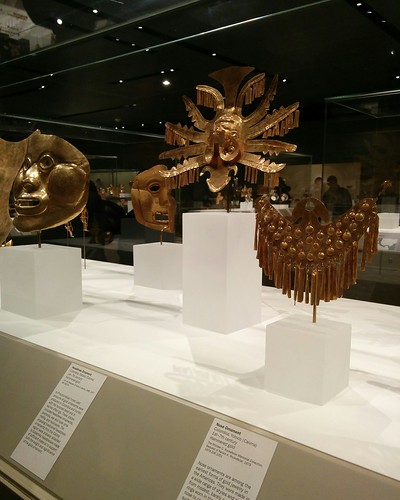
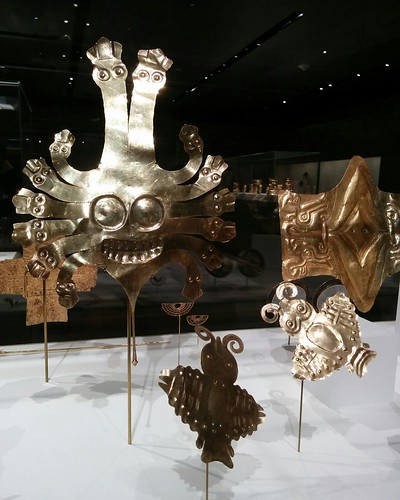
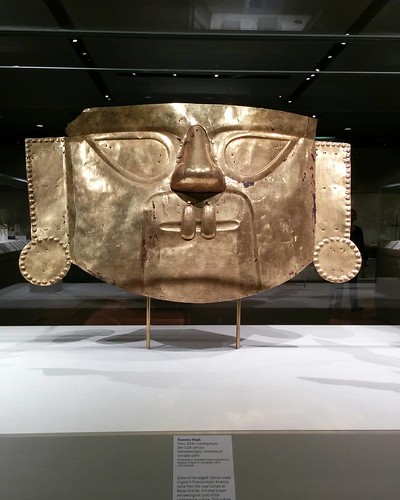
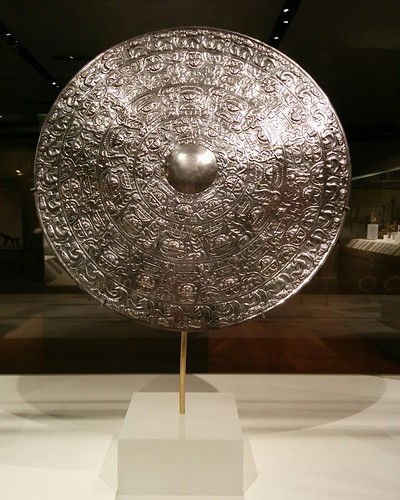
The skill of the metalworkers of pre-Columbian Colombia and Peru, capable of making gold and silver into such intricate and diverse shapes, really impressed me when we were walking through this gallery at the Met.

Made of hammered gold #newyorkcity #newyork #manhattan #metmuseum #colombia #gold #hammeredgold #latergram


Flying fish pendants #newyorkcity #newyork #manhattan #metmuseum #colombia #gold #pendants #latergram


Dance wands #newyorkcity #newyork #manhattan #metmuseum #peru #gold #hammeredgold #nasca #latergram


Funerary mask #newyorkcity #newyork #manhattan #metmuseum #peru #gold #hammeredgold #sican #latergram


Disk (shield cover) #newyorkcity #newyork #manhattan #metmuseum #peru #silver #chimu #latergram
rfmcdonald: (Default)

  • Anthro{dendum] considers drifting on roads as an indicator of social dynamism, of creative reuse of road infrastructures by the young.

  • Bad Astronomer Phil Plait shares photos of the Christmas Tree Cluster, a portion of NGC 2264.

  • Centauri Dreams notes how the strange polar orbit of GJ 436b indicates the presence of a neighbouring exoplanet so far not detected directly.

  • Crooked Timber considers the import of perhaps racist codings in children's literature.

  • D-Brief examines how NASA is trying to quietly break the sound barrier.

  • Bruce Dorminey suggests building a Mars-orbit space station makes sense for us as our next major move in space.

  • Hornet Stories shares the story of queer male Lebanese belly dancer Moe Khansa and his art.

  • Language Hat notes how one student made substantial progress of decoding the ancient khipus, knotted string records, of the Incan civilization.

  • Lawyers, Guns and Money makes the obvious point that opioids actually do help people manage chronic pain effectively, that they have legitimate uses.

  • Allan Metcalf at Lingua Franca talks about some of the peculiarities of English as spoken in Utah.

  • Noah Smith at Noahpinion argues the disappearance of the positive impact of college on the wages who drop out before completing their program shows the importance of higher education as a generator of human capital, not as a simple sort of signal.

  • The NYR Daily looks at some particularly egregious instances of gerrymandering in the United States.

  • The Power and the Money's Noel Maurer examines the origins of street violence as a political force in modern Argentina.

  • Roads and Kingdoms looks at the Seoul neighbourhood of Haebangchon, "Little Pyongyang," a district once populated by North Korean and Vietnamese refugees now becoming a cosmopolitan district for people from around the world.

  • Starts With A Bang's Ethan Siegel notes the origins of the atoms of our body in stellar catastrophes detectable from across the universe.

  • Strange Company notes the case of Catherine Packard, reported dead in 1929 but then found alive. Whose body wasit?

  • Towleroad reports a study suggesting same-sex relationships tend to be more satisfying for their participants than opposite-sex relationships are for theirs.

  • Window on Eurasia notes how a Russian Orthodox group is joining the fight against Tatarstan's autonomy.

rfmcdonald: (Default)

  • Anthrodendum considers the difficulties of the anthropologist in the context of a world where their knowledges are monetized.

  • The Broadside Blog's Caitlin Kelly talks about two days she spent in Montréal, with photos.

  • Crooked Timber starts a discussion about the justice, or lack thereof, in Harvard denying convicted murderer Michelle Jones entry into their doctoral program now that her sentence is over.

  • D-Brief looks at the changing nature of the global disease burden, and its economic consequences.

  • Lawyers, Guns and Money notes that Equifax's terribly lax data protection should mark the endgame for them.

  • The Map Room Blog considers the use of earth-observer satellites to predict future disease outbreaks (malaria, here, in Peru).

  • Starts With A Bang's Ethan Siegel notes how quantum mechanics helps explain nuclear fusion in our sun.

  • Window on Eurasia notes a report that Muscovites live on average 12 years longer than non-Muscovite Russians.

rfmcdonald: (Default)

  • Bloomberg reports on Dutch losses from Brexit, looks at the scene in Fallujah, observes the fragmentation of Venezuela's opposition, and notes the positive impact of a solar energy boom on Japan's fuel consumption.

  • Bloomberg View notes the lack of regional pressure on Venezuela, reports that Brexit would hit Britain's poor and British-based banks hard, and suggests Russian support for the European far right is secondary.

  • CBC looks at Canada's restrictive Internet packages.

  • The Inter Press Service notes Thailand's progress in controlling HIV/AIDS, looks at Peru's elections, and notes Uruguay's hopes to be an offshore oil producer.

  • National Geographic notes the sperm whales in the Caribbean seem to have a distinctive culture.

  • The National Post notes there is no such thing as wilderness, that the entire Earth is touched by human activities.

  • Open Democracy looks at Egypt's fear of the urban poor and considers what can be learned about the failure of the Swiss basic income initiative.

  • The Toronto Star notes a stem cell-based treatment for MS that offers radical improvements, even cures.

  • Wired notes that AirBnB is unhappy with new San Francisco legislation requiring the registration of its hosts.

rfmcdonald: (Default)
Easter Island, easternmost outpost of Polynesia, has long been of at least passing interest to me. Even before Jared Diamond had presented a story of the island culture's eventual decine through environmental exploitation as a warning for our times in the mid-1990s, I had been interested in the island for its cultural achievements. There were the famous moai statues, depicted in the books I read as a child as liberally scattered across the island, but there was also the mysterious rongorongo, something that might be a script but was currently undecipherable. What mysteries did the island hide?


Aurbina's photo in the Wikimedia Commons, "Moai set in the hillside at Rano Raraku", is superb.

Diamond's narrative was simple.

Eventually Easter’s growing population was cutting the forest more rapidly than the forest was regenerating. The people used the land for gardens and the wood for fuel, canoes, and houses--and, of course, for lugging statues. As forest disappeared, the islanders ran out of timber and rope to transport and erect their statues. Life became more uncomfortable-- springs and streams dried up, and wood was no longer available for fires.

People also found it harder to fill their stomachs, as land birds, large sea snails, and many seabirds disappeared. Because timber for building seagoing canoes vanished, fish catches declined and porpoises disappeared from the table. Crop yields also declined, since deforestation allowed the soil to be eroded by rain and wind, dried by the sun, and its nutrients to be leeched from it. Intensified chicken production and cannibalism replaced only part of all those lost foods. Preserved statuettes with sunken cheeks and visible ribs suggest that people were starving.

With the disappearance of food surpluses, Easter Island could no longer feed the chiefs, bureaucrats, and priests who had kept a complex society running. Surviving islanders described to early European visitors how local chaos replaced centralized government and a warrior class took over from the hereditary chiefs. The stone points of spears and daggers, made by the warriors during their heyday in the 1600s and 1700s, still litter the ground of Easter today. By around 1700, the population began to crash toward between one-quarter and one-tenth of its former number. People took to living in caves for protection against their enemies. Around 1770 rival clans started to topple each other’s statues, breaking the heads off. By 1864 the last statue had been thrown down and desecrated.


The problem with this story, I began learning a few years ago, is that it isn't true. The bulk of ecological damage to the island was, two archaeologists argued, a consequence of the accidental importation of the Polynesian rat, compromising native ecosystems. The Rapa Nui of the island ended up coping quite well, as described in 2013 at NPR.

For one thing, they could eat rats. As J.B. MacKinnon reports in his new book, The Once and Future World, archeologists examined ancient garbage heaps on Easter Island looking for discarded bones and found "that 60 percent of the bones came from introduced rats."

So they'd found a meat substitute.

What's more, though the island hadn't much water and its soil wasn't rich, the islanders took stones, broke them into bits, and scattered them onto open fields creating an uneven surface. When wind blew in off the sea, the bumpy rocks produced more turbulent airflow, "releasing mineral nutrients in the rock," J.B. MacKinnon says, which gave the soil just enough of a nutrient boost to support basic vegetables. One tenth of the island had these scattered rock "gardens," and they produced enough food, "to sustain a population density similar to places like Oklahoma, Colorado, Sweden and New Zealand today."

According to MacKinnon, scientists say that Easter Island skeletons from that time show "less malnutrition than people in Europe." When a Dutch explorer, Jacob Roggevin, happened by in 1722, he wrote that islanders didn't ask for food. They wanted European hats instead. And, of course, starving folks typically don't have the time or energy to carve and shove 70-ton statues around their island.

[. . .]

Because, say the Hawaiian anthropologists, clans and families on Easter Island didn't fall apart. It's true, the island became desolate, emptier. The ecosystem was severely compromised. And yet, say the anthropologists, Easter Islanders didn't disappear. They adjusted. They had no lumber to build canoes to go deep-sea fishing. They had fewer birds to hunt. They didn't have coconuts. But they kept going on rat meat and small helpings of vegetables. They made do.


Discover's Collide-a-scape took a look in 2014 at the shift in the consensus away from a long history of decline. Estimates of ancient population sizes have been found to be overlarge, for instance. The Rapa Nui seem to have been good custodians of their island. The newest studies seem to confirm this.

What ended a civilization that built so many impressive stone statues and even managed to develop what might have been a writing system? The statues were no longer being built when the Chileans came, nor was knowledge of rongorongo passed on. What happened to the Rapa Nui? Not ecocide, as Diamond's scenario implies, but genocide.


The above Wikimedia Commons picture shows Side b of Rongorongo Text R, one of the few rongorongo texts to survive. I saw them myself in a 2001-2002 exhibition at New York City's Metropolitan Museum of Art, Splendid Isolation: The Art of Easter Island. The catalogue, happily, is available in PDF format here. Texts R and S were there on loan from the Smithsonian, along with a few dozen artifacts of pre-contact Rapa Nui society. This society did not survive, it turns out, because it was actively destroyed as a consequence of genocidal acts. Wikipedia's dry summary leaves my head spinning at the scale of the catastrophe.

In December 1862, Peruvian slave raiders struck Easter Island. Violent abductions continued for several months, eventually capturing or killing around 1500 men and women, about half of the island's population. International protests erupted, escalated by Bishop Florentin-Étienne Jaussen of Tahiti. The slaves were finally freed in autumn, 1863, but by then most of them had already died of tuberculosis, smallpox and dysentery. Finally, a dozen islanders managed to return from the horrors of Peru, but brought with them smallpox and started an epidemic, which reduced the island's population to the point where some of the dead were not even buried.


Little wonder, as I noted in my review of Andrew Robinson's Lost Languages, that the few survivors of Easter Island by the end of the 1860s had abandoned much of their traditional culture. For all its brilliance, all its accomplishments and knowledge, it had clearly failed to save the Rapa Nui from catastrophe. That conscious rejection made far more sense to me than Diamond's narrative of decline.

Savage Minds noted in 2005 that researchrs were challenging the integrity of Diamond's historical research. Sitting here in 2016, knowing what I know about how the depopulation of any number of colonized populations by disease and the extension of foreign rule and how this depopulation has been used to justify the very colonization, I wonder about the potential misuses of Diamond's apparent misinterpretation of the island's historical trajectory. Is his model of an imagined Easter Island as a metaphor for the Earth and its risks even usable?
rfmcdonald: (Default)
The 19th century War of the Pacific continues to overshadow Chile's relations with Peru, as it does more visibly Chile's relations with Bolivia. Bloomberg's John Quigley describes how bitterness over lost territory persists.

Andean neighbors Chile and Peru are at it again. After resolving a decades-old dispute over their maritime border last year, talks to deepen integration have broken down over a patch of arid sand and rock the size of six soccer fields -- and that is when the tide is out.

Peru’s President Ollanta Humala on Saturday signed a law creating a municipality on its southern border that includes an coastal area measuring 3.7 hectares (9.1 acres) claimed by Chile. Chile’s Foreign Ministry said the triangle-shaped territory is “unquestionably Chilean” and canceled a meeting with Peruvian ministers scheduled for next month.

It is a sensitive issue for Chile. The country lost sovereignty over an area of sea the size of Costa Rica to Peru last year in a ruling by the International Court of Justice in the Hague. That same court has just ruled that it will listen to Bolivian arguments for Chile to start negotiations over its demand for access to the sea, lost to Chile in the Pacific War of 1879. Chile doesn’t want to lose another ruling.

“What seem to be extremely minor issues play into really deep historical and
nationalist sentiment in both countries,” said Greg Weeks, a professor of
political science at the University of North Carolina at Charlotte, in a phone
interview. “Until the boundaries are agreed upon by both sides, down to the inch, you’ll just have disputes that keep popping up over and over again.”
rfmcdonald: (Default)

  • Crooked Timber wonders what Nietzche would have to say about immigration.

  • The Dragon's Gaze links to a paper examining the atmospheres of different exoplanets orbiting different kinds of stars.

  • The Dragon's Tales notes that Pluto and Charon may have iron cores.

  • Joe. My. God. notes that Martin Shkreli's newly-overpriced drug is being vastly underpriced by a new competitor.

  • Language Hat notes a Yiddish translation of a Chinese song.

  • Languages of the World argues that the Indo-Europeans are an identifiable people.

  • Marginal Revolution considers the nature of Chinese economic growth.

  • The Power and the Money's Noel Maurer looks at the fiscal constraints of Brazil and notes the interactions of the vulture funds with Peru.

  • Bruce Sterling on his tumblr shares a post looking at an American shantytown.

  • Supernova Condensate enthuses about Enceladus.

  • The Understanding Society Blog's Daniel Little considers how to model organizational recruitment.

  • The Financial Times' The World blog wonders if the German economy will benefit from Merkel's open door.

  • Yorkshire Ranter Alex Harrowell notes the menace of coordinated hype cycles.

rfmcdonald: (Default)
CBC reports on the controversy in Peru surrounding the apparent desire of an uncontacted indigenous tribe to make contact, and fears that this could end up backfiring.

Missionaries and tourists are increasingly making contact with an isolated "uncontacted" tribe in Peru, fuelling what the Peruvian government calls a "dangerous situation" and an ethical debate about how governments should deal with the world's uncontacted tribes.

For decades or centuries, the nomadic Mashco Piro people have kept to themselves in the jungles of Manu National Park in southeastern Peru, Luis Felipe Torres Espinoza, Peru's deputy minister of multi-culturalism told CBC's The Current.

However, recently they have started to make contact with nearby indigenous populations, seeking cultivated food such as plantains and metal objects such as knives and pots. Missionaries have also made contact with them, offering them gifts and trying to convert them to Christianity. Tourists en route to the national park have stopped to take pictures of them and give them gifts, Torres Espinoza said.

The encounters could put the Mashco Piro at risk of contracting deadly diseases — they have no natural immunity to contagious illnesses such as influenza and measles. They are also potentially risky to outsiders, as uncontacted tribes been known to attack and kill people outside their tribe.

"What we have seen is a dangerous situation," Torres Espinzo added through a translator. "It's an emergency that we're starting to get under control."


There's more at CBC.
rfmcdonald: (Default)
Bloomberg View's Justin Fox writes, with charts, about the slow economic growth over Latin America over the past century. Only Chile shows signs of converging strongly and consistently towards high-income levels.

[E]vident in [Hans] Rosling’s animations is the great breakout to much-higher living standards that the U.S., Canada, Western Europe, Australia and New Zealand made in the 1800s, followed by the great catchup in Asia since the middle of the 20th century. Some African countries have begun making big strides, too, although sub-Saharan Africa remains the world’s poorest region by far.

Then there’s Latin America and the Caribbean, whose part in this story has always intrigued and saddened me. In the 19th century, some of the countries and colonies to the south of the U.S. were among the world’s most affluent. In the 20th century most of them have become much more affluent in an absolute sense (Haiti is the tragic exception). They have nonetheless lost relative ground, especially during the past half-century, as rich countries just got richer and Asian nations broke through to wealth.

[. . .]

Compared to these other, more dynamic economies, Latin America seems to have been making hardly any progress. I’m not even going to try to go into all the possible reasons for this, in part because they vary greatly among countries. I am willing to go out on a limb and say that I don’t think either U.S. imperialism or persistent bad luck is a satisfactory explanation for Latin America’s slow growth. Clearly these -- with the possible exception of Chile -- have not been among the world’s best-managed economies. And that really is too bad.

Profile

rfmcdonald: (Default)rfmcdonald

February 2021

S M T W T F S
 123456
78910111213
14151617181920
212223242526 27
28      

Syndicate

RSS Atom

Style Credit

Expand Cut Tags

No cut tags
Page generated May. 6th, 2026 11:29 pm
Powered by Dreamwidth Studios